Sustainable Thermal Insulation That Performs, Not Just Promises
By 2050, the world’s building floor area is expected to double and global air-conditioning demand to triple, driven largely by rapid growth in hot-climate regions, specially in the Middle East, Africa, and South Asia. At the same time, nearly 68% of the global population will live in cities, increasing pressure on urban infrastructure, cooling demand, and energy consumption.
Against this backdrop, Net Zero 2050 aims to balance greenhouse gas emissions with removals to limit global warming to 1.5°C. Efficient thermal insulation plays a critical role in reducing energy demand in buildings, lowering emissions, and enabling more sustainable urban growth.
Every project insulated with Aerofoam products represents a step toward a more efficient world. This is why Aerofoam serves not only as a material supplier, but as a partner in the global transition toward lower-carbon industry. Advanced, long-lasting foam technology is more than a core offering—it is Aerofoam’s contribution to building a more sustainable future.
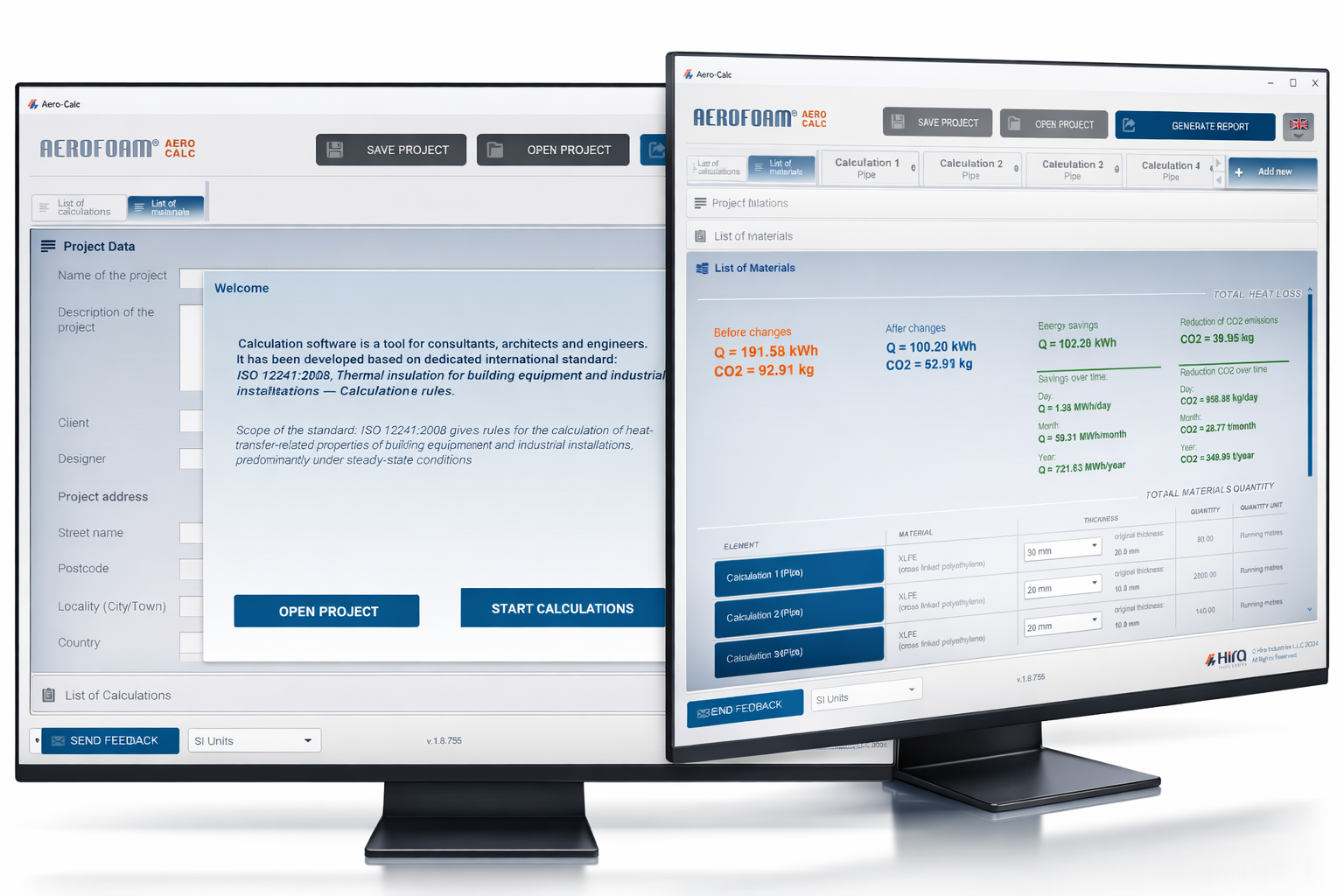
AeroCalc software is an excellent tool for calculating the most optimal thicknesses of insulation to reduce energy consumption and CO₂. The software is developed in accordance with ISO 12241.
Download* Results could vary depending on the environment and application. Based on highly conservative assumptions and an estimated 25-year service life for cold applications.
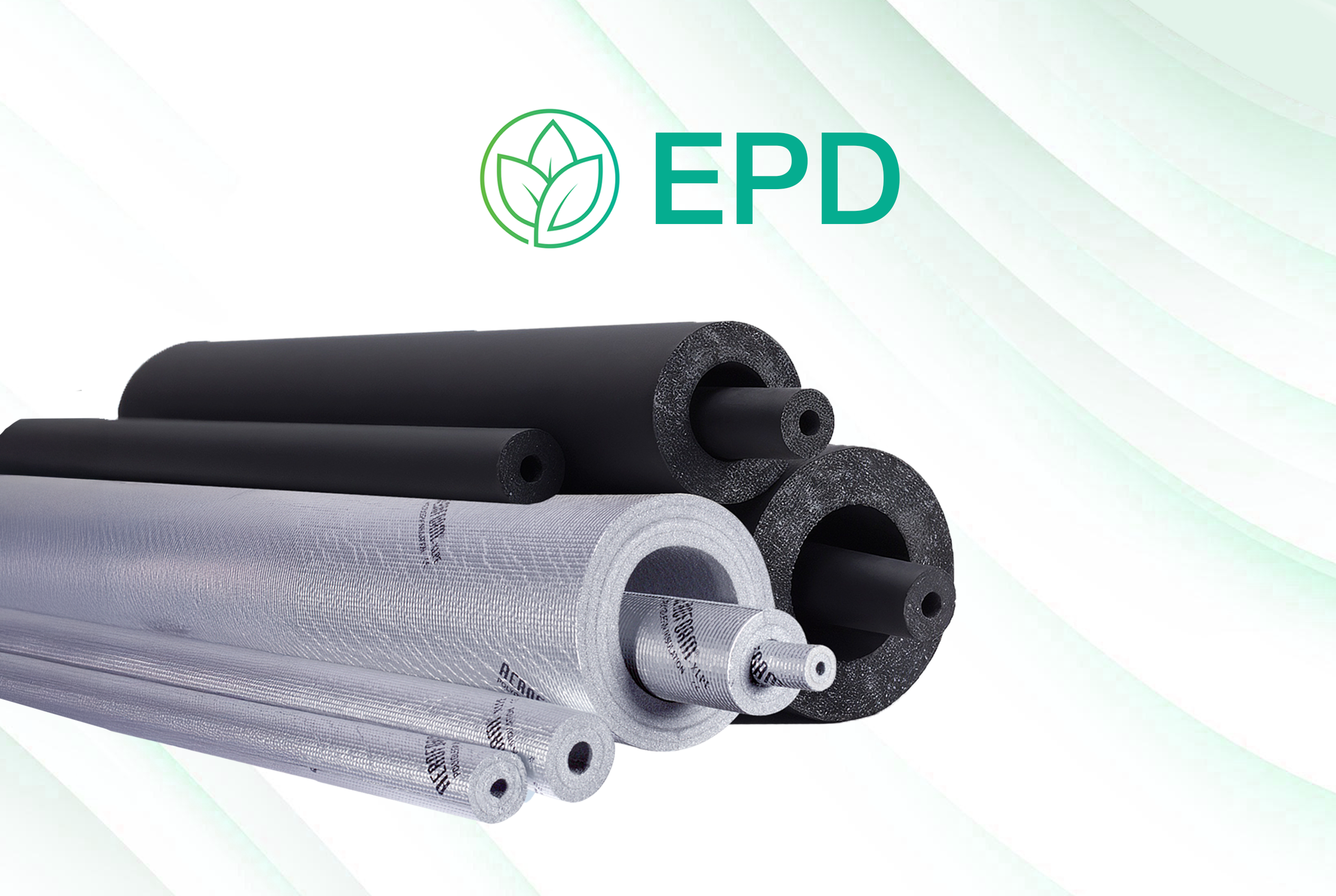
At Aerofoam, we are committed to providing insulation solutions that not only deliver outstanding performance but also meet the highest standards of environmental responsibility. Our Environmental Product Declaration (EPD) is a testament to that commitment, offering transparent, verified, and scientifically grounded data about the environmental impact of our products throughout their entire life cycle.
Our EPD documents the ways in which Aerofoam thermal insulation affects the environment throughout its lifecycle, encompassing resource use, greenhouse gas emissions and a range of other key environmental indicators. This information is independently verified and produced in accordance with internationally recognised standards, including ISO 14025 and EN 15804, ensuring full credibility and comparability.
EPDs are developed and cross-checked independently by a verified third party prior to publication, ensuring that the environmental data presented are reliable, credible, and scientifically robust. We believe that meaningful sustainability must be measurable, and our EPD makes that possible.

“As we look to the future, our focus remains on investing in advanced manufacturing and sustainable practices — ensuring we continue to add value to the industries we serve.”
Prakash Sarvaiya
Group CEO
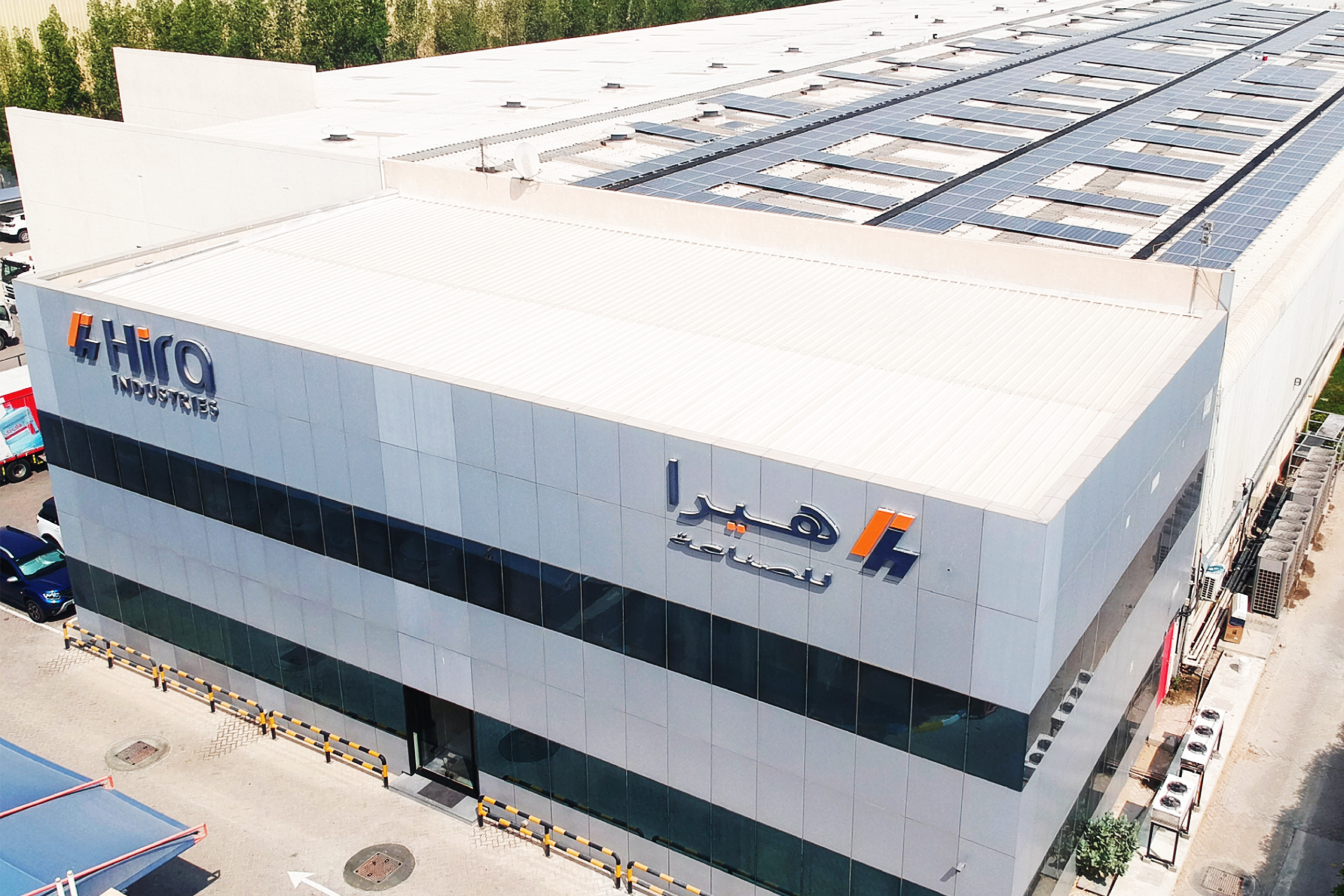
Hira Group has reinforced its sustainability agenda through the integration of renewable energy solutions across its facilities in the UAE, India, and Vietnam. This initiative has been implemented to support the group’s long-term environmental commitments.
By incorporating renewable energy into its infrastructure, Hira Group reduces reliance on conventional electricity sources, lowers carbon emissions, lowers fossil fuel usage and enhances operational efficiency across its global manufacturing ecosystem.
We are committed to sourcing materials as locally as possible to reduce transport emissions and support regional supply chains. At the same time, we continuously work to minimize waste across our manufacturing processes through smarter production planning, material optimization and recycling initiatives, and to follow regional and national policies in this matter.
Senior leadership has consistently emphasized that sustainability is embedded within the group’s long-term strategy. Initiatives such as these contribute to cost optimization, environmental responsibility, and Hira Group’s continued role in driving sustainable growth across the regions it serves.