
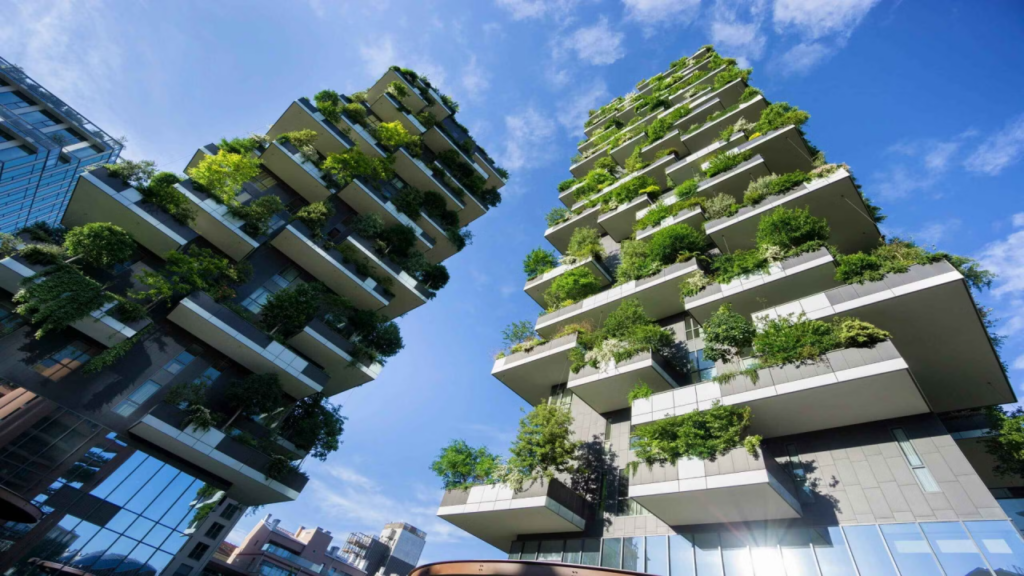
Sustainable buildings have moved from the margins to the mainstream. Across Saudi Arabia and the wider GCC, environmental performance now plays a decisive role in project financing, commercial appeal, and long-term asset value. As the region accelerates its Vision 2030 and global net-zero commitments, certification frameworks like LEED, BREEAM, and the Mostadam standards are shaping how buildings are designed, built, operated. The thermal insulation materials specified are playing a bigger role than many realize.
LEED, BREEAM at a Glance:
LEED, the benchmark favoured by international developers, investors, and international clients across the GCC and world, places strong emphasis on energy performance, emissions reduction and indoor environmental air quality. BREEAM brings a similarly rigorous methodology and is gaining traction on large-scale mixed-use and hospitality projects across the UAE, Saudi Arabia, and Qatar. The Saudi adaptation Mostadam, is another framework considering the region’s unique climate realities -extreme heat, solar intensity, and water scarcity -making them highly relevant for projects from Riyadh to Jeddah to NEOM.
Across all these systems, a common thread runs through energy efficiency, CO₂ emissions, and thermal comfort are non-negotiable pillars. In a region where cooling loads dominate energy consumption, that’s precisely where HVAC/R systems thermal insulation becomes critical.
The Quiet Workhorse: Thermal insulation in Extreme Climates:
In the GCC, the battle isn’t just against heat loss -it’s equally against heat gain and condensation. Chilled water networks, district cooling systems, air handling units, and refrigerant lines are under constant thermal stress in climates that regularly exceed 45°C at its peak. Every degree of cooling lost through poorly specified, procured or installed thermal insulation is a direct hit to a building’s energy performance and to its certification score along with the systems lifespan.
High-performance closed cell XLPE (cross-linked polyolefin) and NBR (nitrile butadiene rubber) thermal insulation foams are purpose-built for these conditions, delivering:
For MEP consultants, contractors, and facility managers across Saudi Arabia and the GCC, thermal insulation specification isn’t a finishing detail -it’s a foundational decision that directly moves the needle on LEED, BREEAM target scores.
Practical Relevance Across GCC Project Types:
Whether it’s a luxury hospitality development on the Red Sea, a large-scale residential community in Riyadh, a healthcare facility in Abu Dhabi, or a commercial tower in Dubai -wherever green certifications are being pursued, the performance of HVAC/R thermal insulation systems is under the microscope.
Projects that specify and install thermal insulation correctly can:
How Aerofoam Supports Your Project:
As a leading manufacturer of XLPE and NBR thermal insulation solutions for HVAC/R and domestic hot water applications, Aerofoam supports MEP contractors, consultants, clients and building operators across Saudi Arabia and the GCC in delivering energy-efficient, certifiable projects.
Our thermal insulation solutions are engineered to minimize thermal losses, resist moisture ingress, and perform reliably through decades of GCC conditions, helping you hit the numbers that LEED, BREEAM, and Mostadam demand, not just on paper, but in the field. Additionally, Aerofoam offers free installation training and on-site support, the free Aerocalc software to calculate insulation thickness, energy savings, and CO₂ reduction, a complete range of dedicated installation accessories, and low-VOC products that contribute to healthier indoor environments.
Pursuing a green-certified project in Saudi Arabia or the GCC? Let’s talk about how Aerofoam can help you get there. Contact Aerofoam Technical team!